
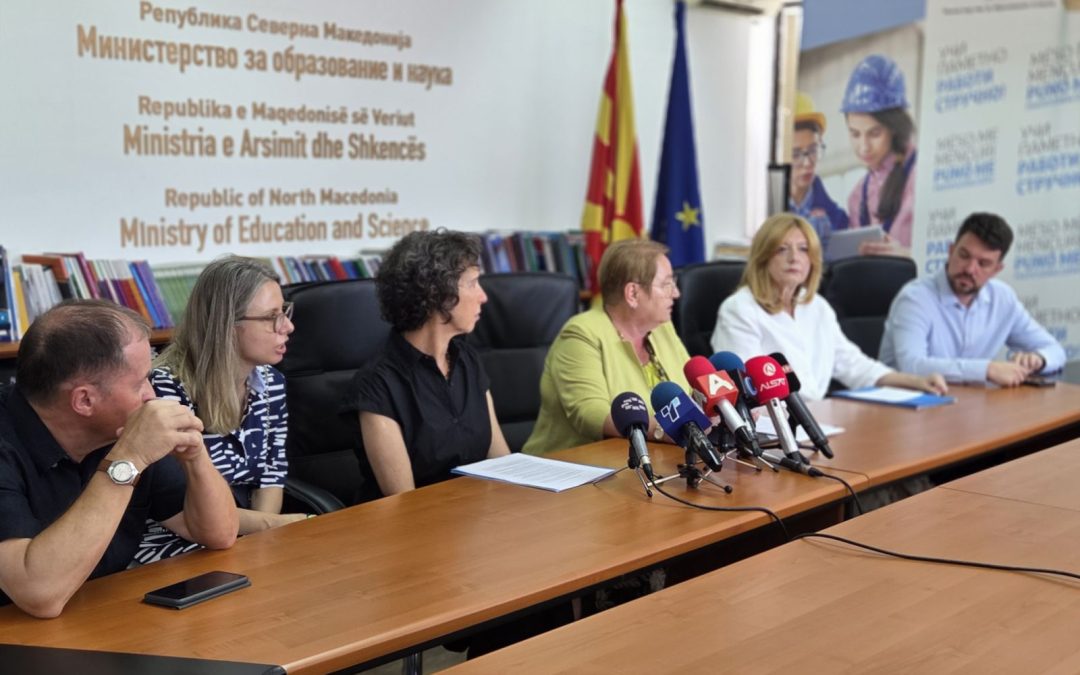
The Government has adopted a new methodology for calculating and distributing funds to municipalities for the organisation of primary and secondary education, which will take effect on 1 January 2026. The methodology was developed by the Ministry of Education and Science with the support of UNICEF, the World Bank, the Swiss Embassy, the ZMAI Association, ZELS, and local self-governments. The expectation is that the change will contribute to a higher quality educational process.
Speakers at the press conference on this topic included the Minister of Education and Science, Vesna Janevska; UNICEF Representative in Macedonia, Leslie Miller; Senior Education Specialist at the World Bank, Bojana Naceva; Director of ZMAI, Viktor Mitevski; and Kurt Wittrich, Team Leader of the organisation *Education for Employment*.
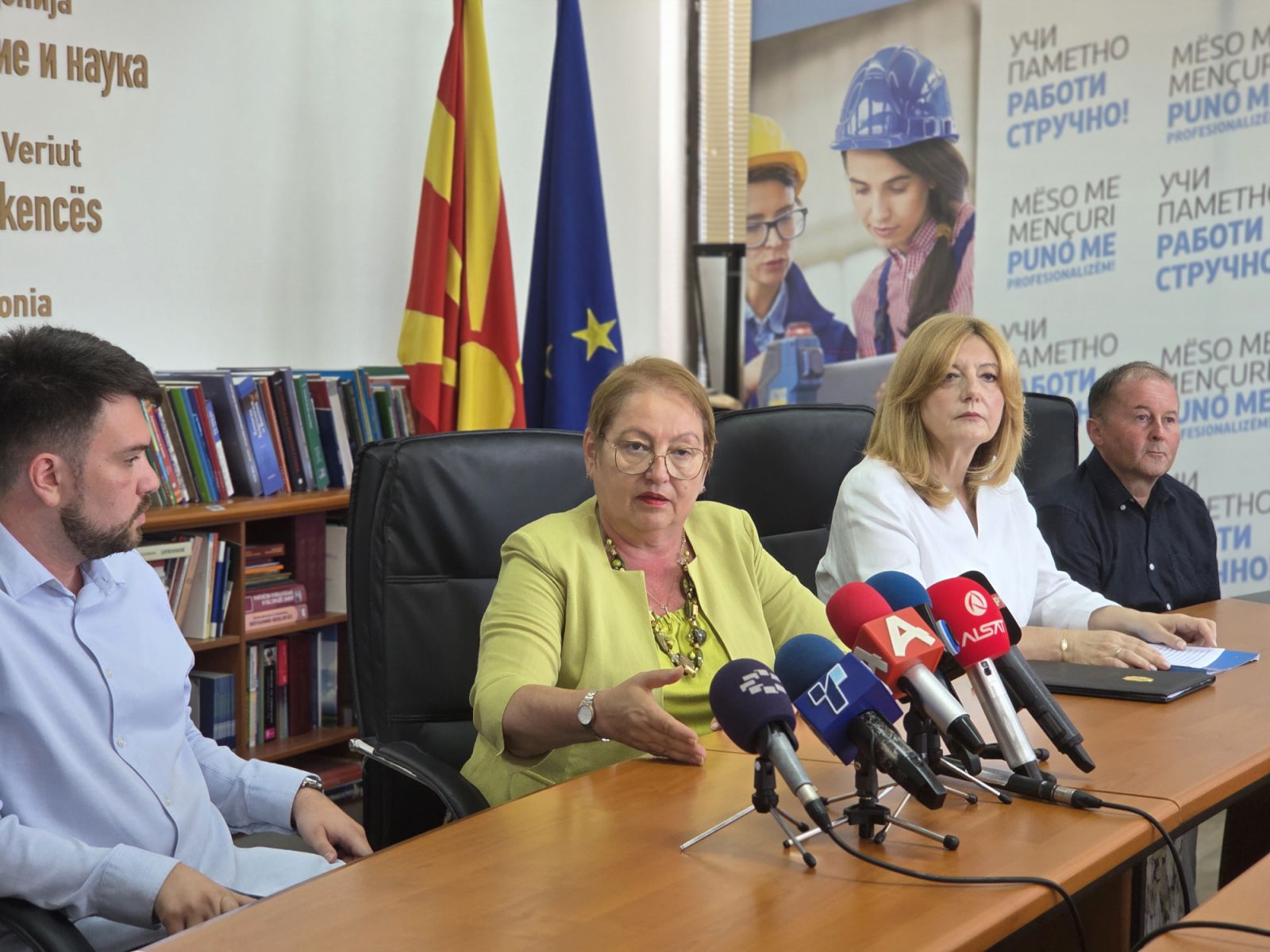
The following is the statement of Viktor Mitevski, Director of ZMAI, delivered at the press conference at the Ministry of Education and Science:
“Generally, this process is not part of the Open Government Partnership initiative. From the very beginning, it was conducted according to the highest principles of control, transparency, and open dialogue. The Ministry, as the lead institution, combined the reports of state bodies familiar with the issue with the expertise of two specialists from all relevant areas, engaged by the World Bank and UNICEF through ZMAI.
It is important to emphasise that this is not a borrowed or, as some might say, an ‘imported’ formula. It is based on changes, experiences, and lessons learned from the EU, but the main knowledge, key proposals, and final solutions stem from five years of work in our own context.
I would also like to extend my gratitude to the DPI, BRO, and ZELS, whose dedication and expert input were instrumental in completing this process. This is an example of how joint work, openness, and expertise can lead to lasting and high-quality solutions for education.”
The speakers highlighted the importance of better financing of education, guided by the needs of students. Minister Vesna Janevska stated that changes to the block grant formulas were necessary due to inefficiencies in financing. She noted that up to 90% of the funds received by municipalities are used for salaries and overhead costs—significantly higher than the EU average of 70%. While block grants are increasing, the funds are often used merely to cover salary growth rather than to improve school facilities or the quality of teaching.
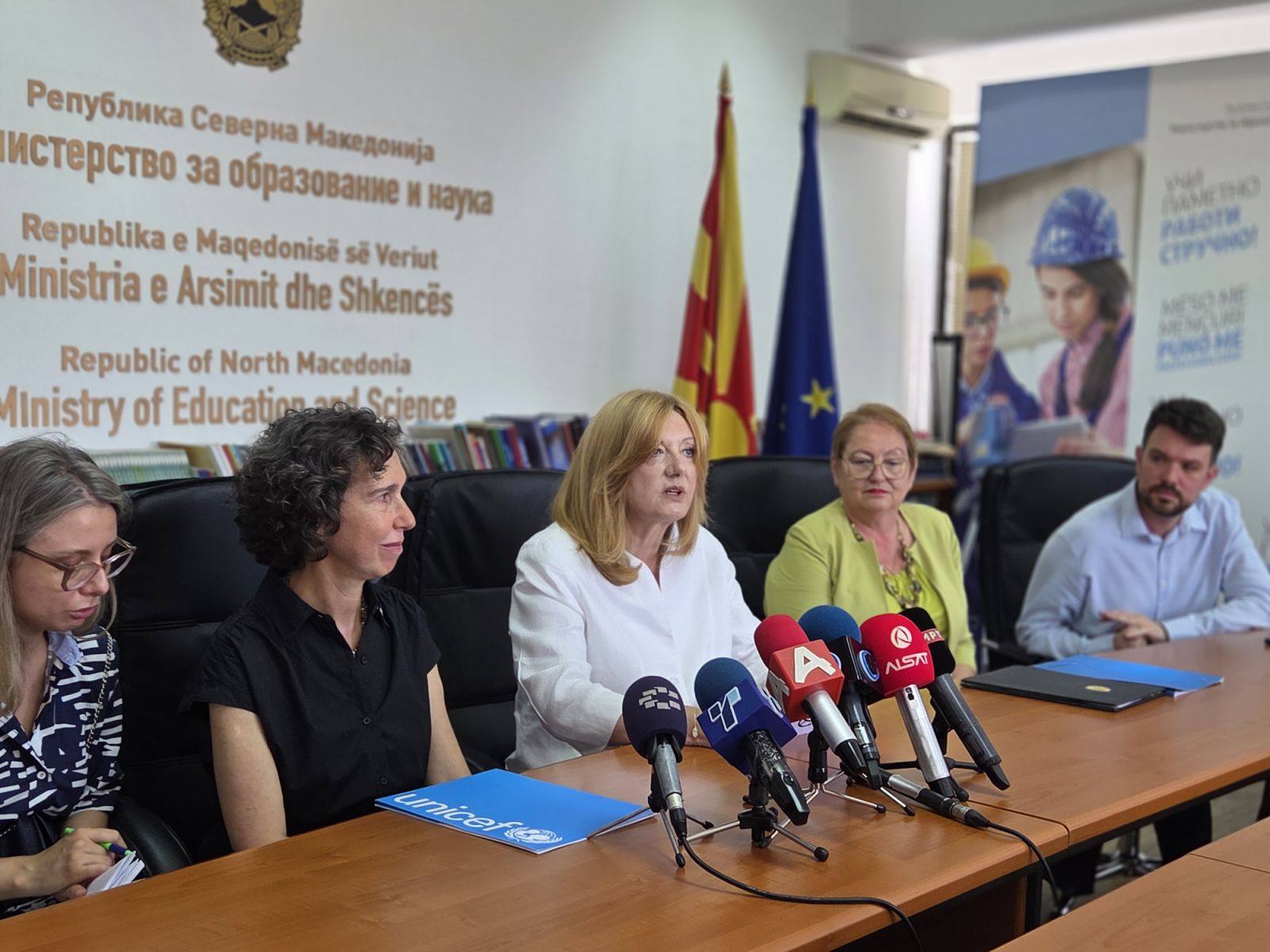
UNICEF Representative Leslie Miller described the reform as a strategic shift towards building a more efficient and inclusive education system. Bojana Naceva, Senior Education Specialist at the World Bank, emphasised that the new methodology ensures greater transparency and accountability in the use of public funds. With clear criteria and rules, each municipality will be able to allocate resources more effectively, fostering trust in the education system and motivating families to engage more actively.
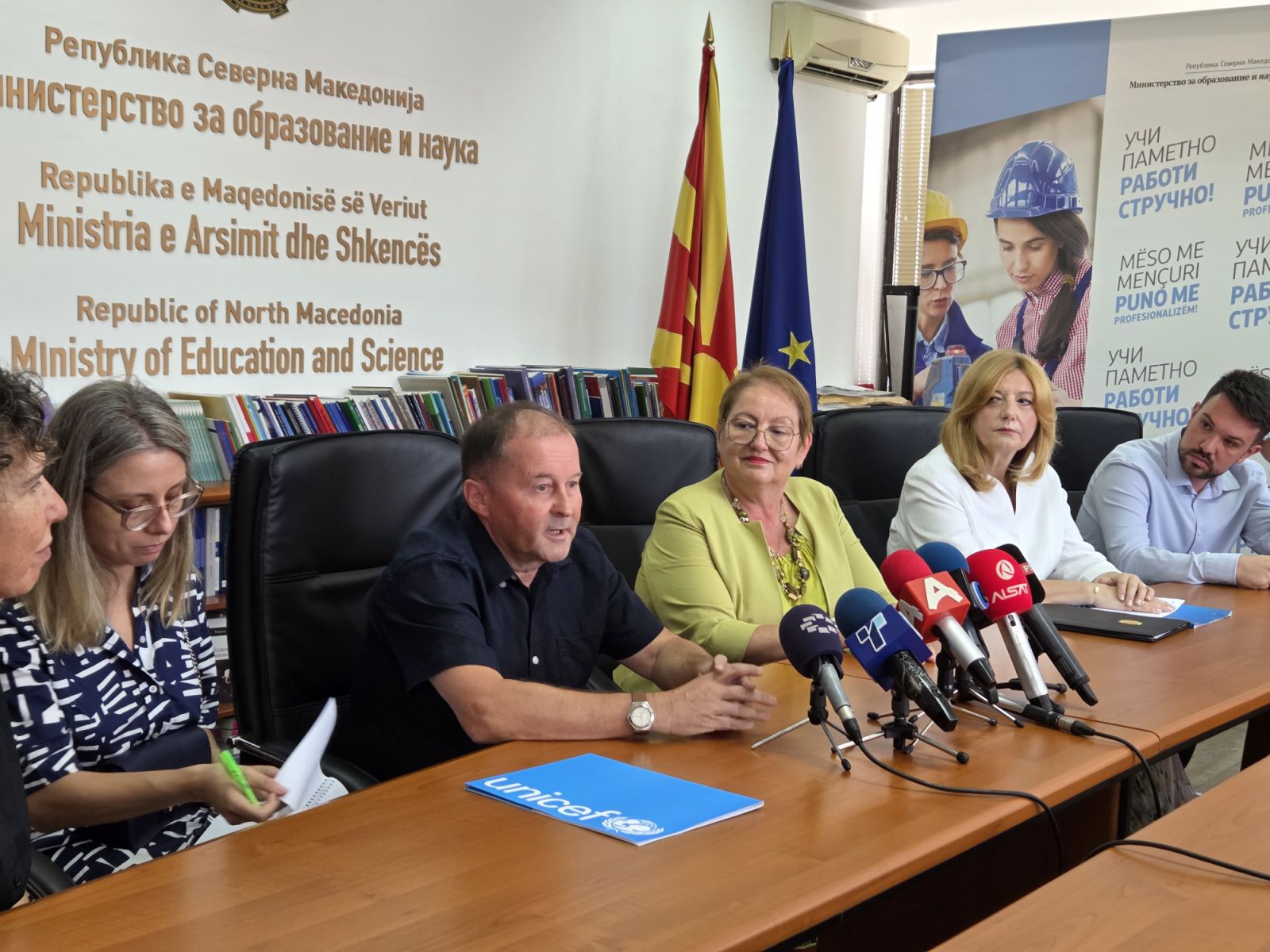
Kurt Wittrich, Team Leader of the *Education for Employment* project funded by the British Embassy, stressed that only through cooperation between institutions and the private sector can vocational education be developed in a way that provides young people with better employment opportunities.
Recent Comments