

Within the framework of the converge2EU project, ZMAI worked on analysing North Macedonia’s convergence with the European Union through comparable data and indicators that connect reform processes with the everyday lives of citizens. This analysis identified several areas in which the country has made significant progress, with neonatal health standing out as one of the most notable examples. The data show that, over the past decade, North Macedonia has achieved a remarkable improvement in reducing neonatal mortality, reaching results that are comparable with, and in this indicator even better than, the European Union average.
Over the past decade, North Macedonia has achieved one of the most significant health improvements in the region: a dramatic reduction in neonatal mortality and a clear convergence with, and even surpassing of, the European Union average in this indicator. What appeared ten years ago to be a long-term systemic challenge now serves as an example of how coordinated health policy, professional commitment, and continuous support from institutions and international partners can produce measurable and sustainable results.
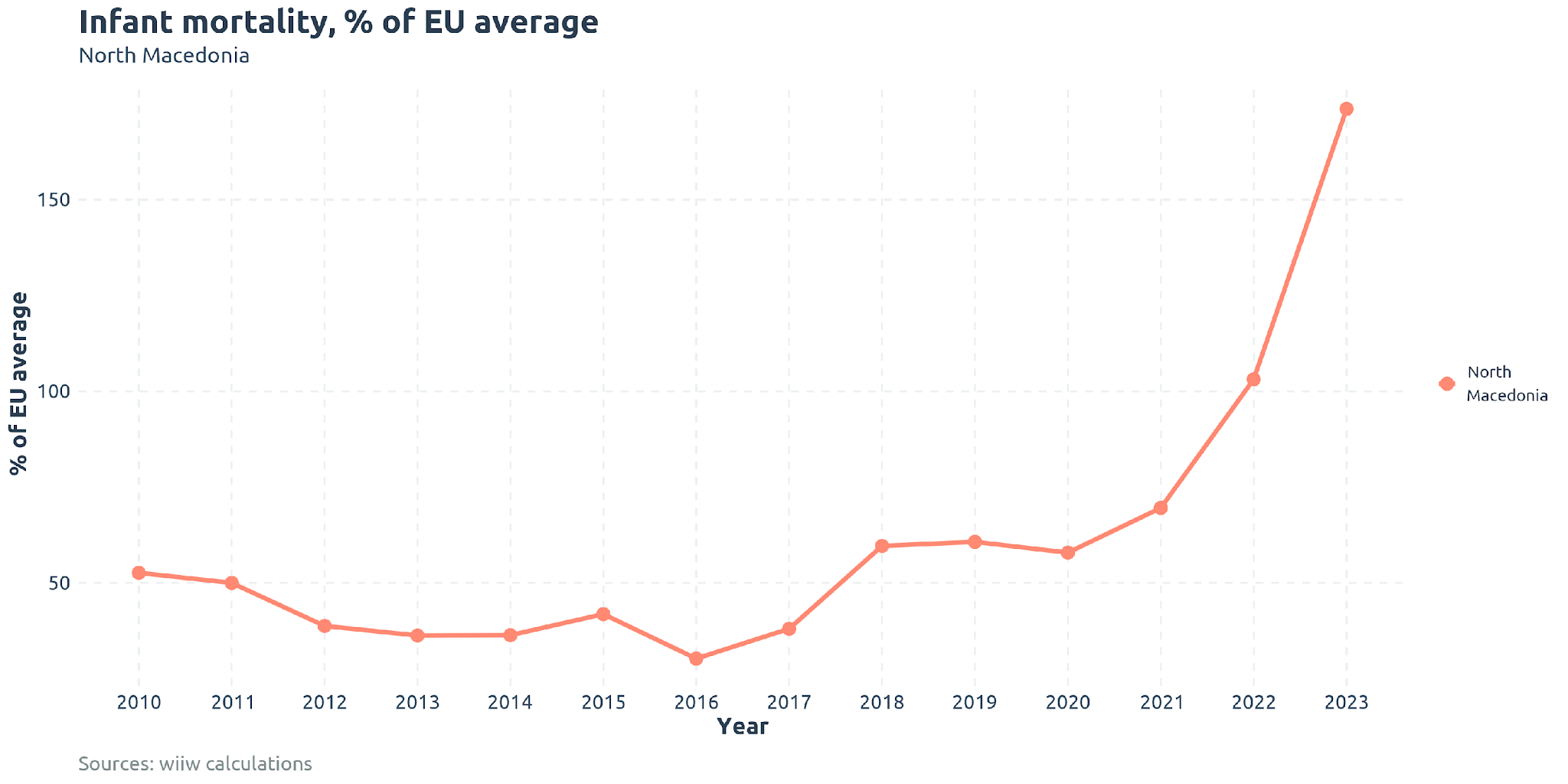
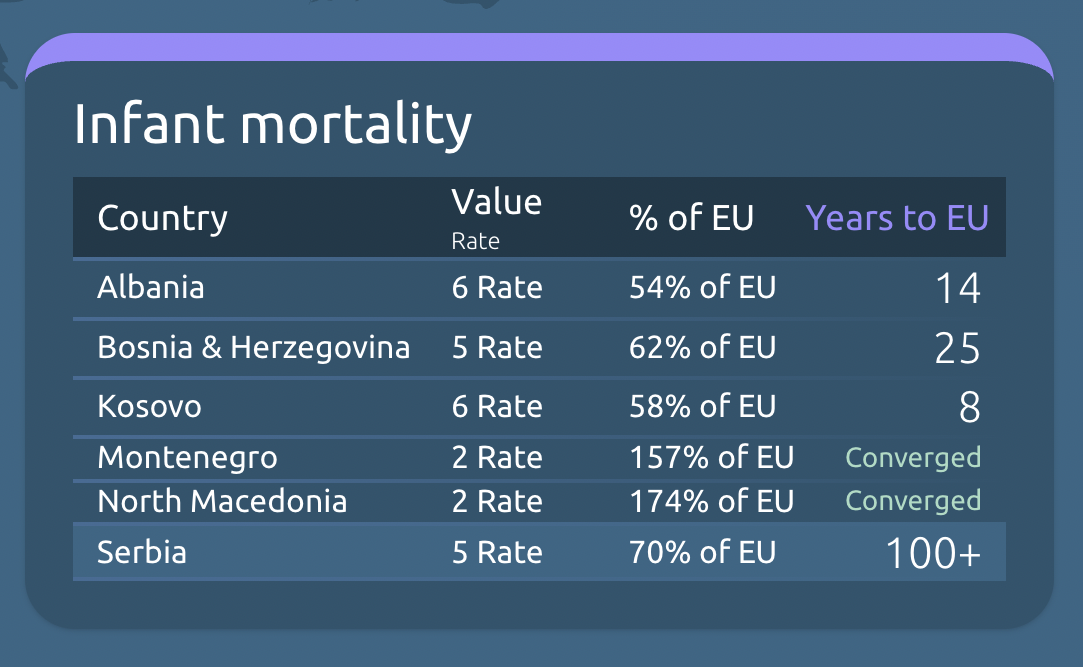
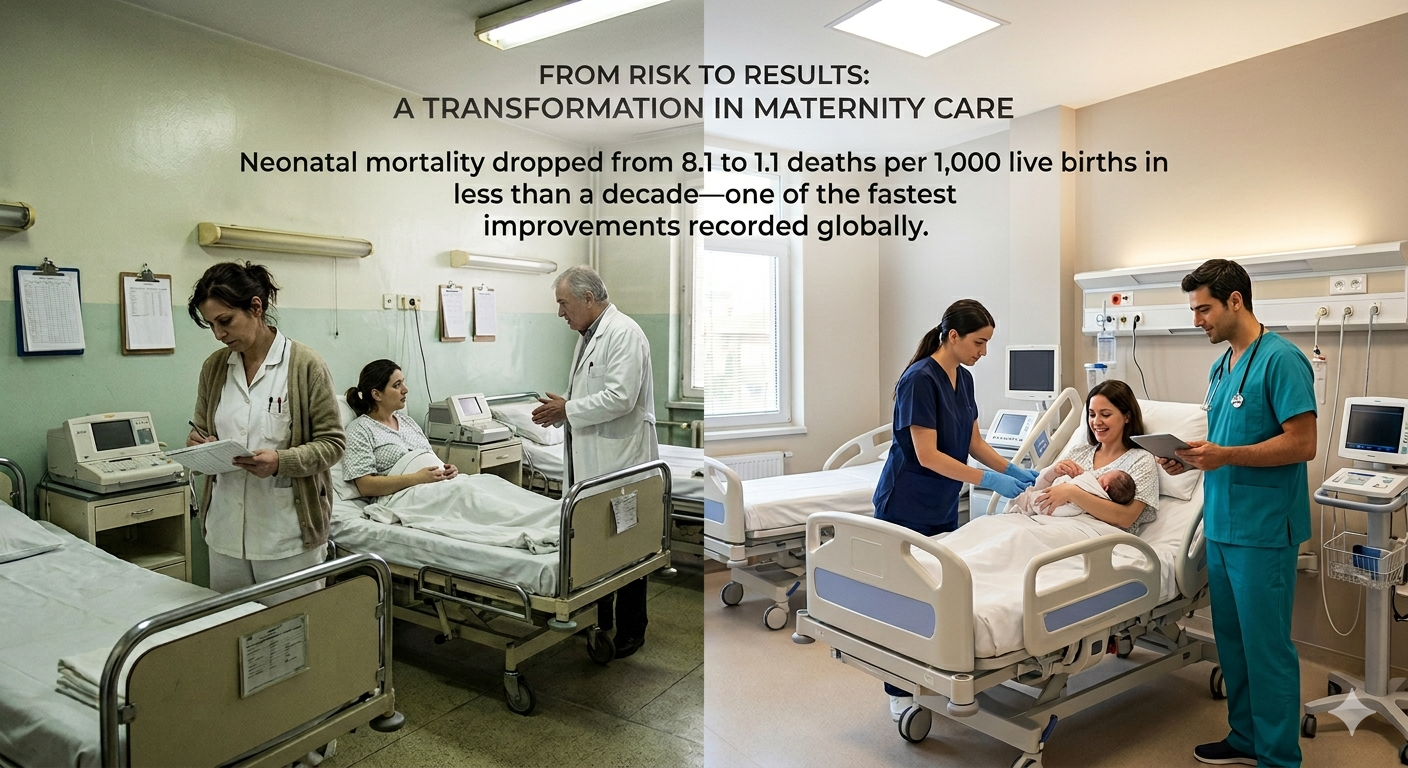
In 2016, the neonatal mortality rate in the country stood at 8.1 deaths per 1,000 live births. In less than a decade, this rate declined to 1.1 deaths per 1,000 live births, representing an exceptionally rapid improvement compared with international trends. By 2022, North Macedonia had reached the European Union average, while today the country records 174% convergence in this indicator, meaning that, according to the methodology used, its results are better than the EU average.
Neonatal mortality in North Macedonia – source: wiiw
North Macedonia’s convergence with the EU in neonatal mortality – source: converge2.eu
This progress is not the result of a single isolated measure, but of a gradual transformation in the way services for mothers and newborns are organised and delivered. In cooperation with the Ministry of Health, UNICEF, WHO and UNFPA, investments were supported in the training of health professionals, the standardisation of protocols in maternity wards, and the improvement of practices related to safe motherhood. The activities linked to the Safe Motherhood Committee, as well as the introduction of perinatal audits in line with WHO guidance, have played a particularly important role by enabling the systematic identification of weaknesses and the improvement of essential newborn care.
Beyond improvements in health facilities, the reforms also had an important equity dimension. Part of the efforts were directed towards vulnerable groups, including Roma communities, through expanded sexual and reproductive health services, support for the development of national strategies, and the provision of services through mobile medical teams. In this way, the system focused not only on the highest-risk cases, but also on improving the overall care provided to mothers, infants and families.
A coordinated systemic approach to maternal and neonatal health
The significance of this progress extends beyond the health sector. In a country facing population ageing and low fertility rates, high-quality care for mothers and newborns directly affects families’ trust in institutions and their sense of security during one of the most important periods of life. Better access to health services, higher-quality care and a more predictable system create conditions in which families can make decisions about starting or expanding a family with greater confidence.
At the same time, this success should be viewed in the context of broader challenges within the health system. North Macedonia continues to face limitations related to life expectancy, the availability of medical staff, and the financial sustainability of health reforms. Nevertheless, the example of neonatal care shows that even in a system with limited resources, a clearly defined objective, professional commitment and coordinated implementation can produce concrete and lasting results.
Progress in neonatal care compared with broader health system challenges

Future progress will likely depend less on the speed of the previous change and more on the ability to sustain the results achieved. This requires stable financing, institutional coordination, retention of trained health professionals, and continued implementation of the Perinatal Care Plan 2020–2030. Perinatal audits will also remain important, as will continued cooperation among institutions, health workers, civil society and international partners.
This example is also significant from the perspective of European integration. Progress in maternal and neonatal health contributes to the development of human capital, strengthens social resilience, and demonstrates that public institutions can implement systemic reforms with visible results. This is consistent with the broader objectives of socio-economic convergence with the European Union and with reform priorities related to health, education, social protection and addressing demographic challenges.
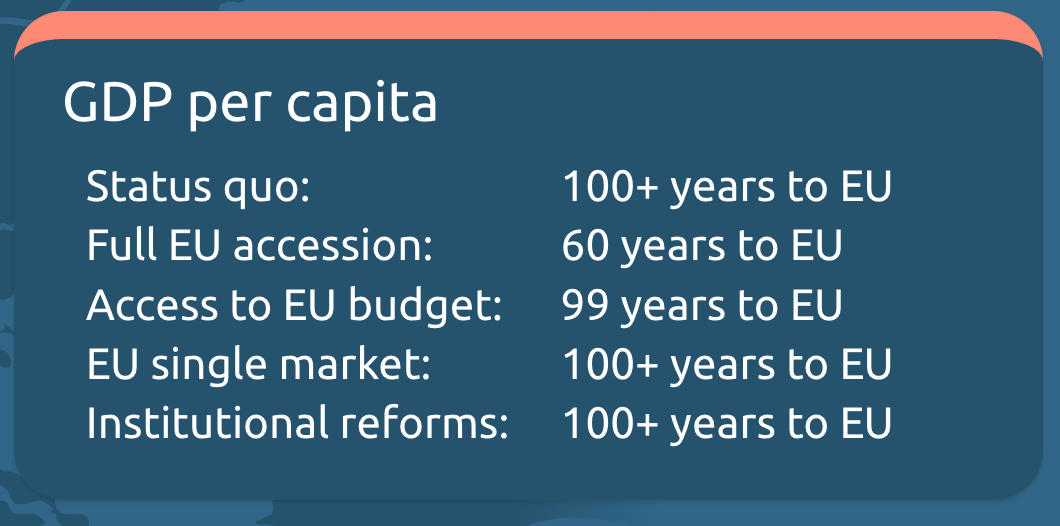
Scenario for GDP per capita convergence with the EU under full membership – source: converge2.eu
Ultimately, transformation is often not seen only in indicators, but in the everyday experiences of families. When check-ups, counselling, and care for mothers and newborns become timely, accessible and reliable, systemic change becomes part of normal life. It is precisely in these seemingly quiet and routine moments that the true meaning of convergence becomes visible: when institutional improvement directly reaches citizens.
The full analysis and data are available through the converge2.eu platform.
Recent Comments