
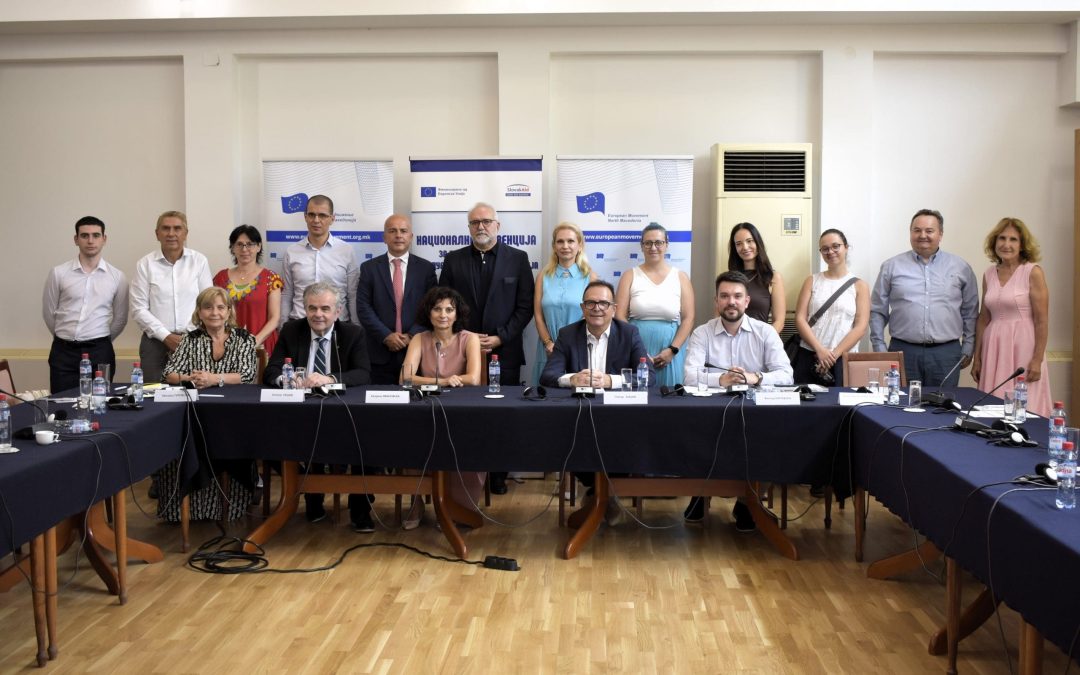
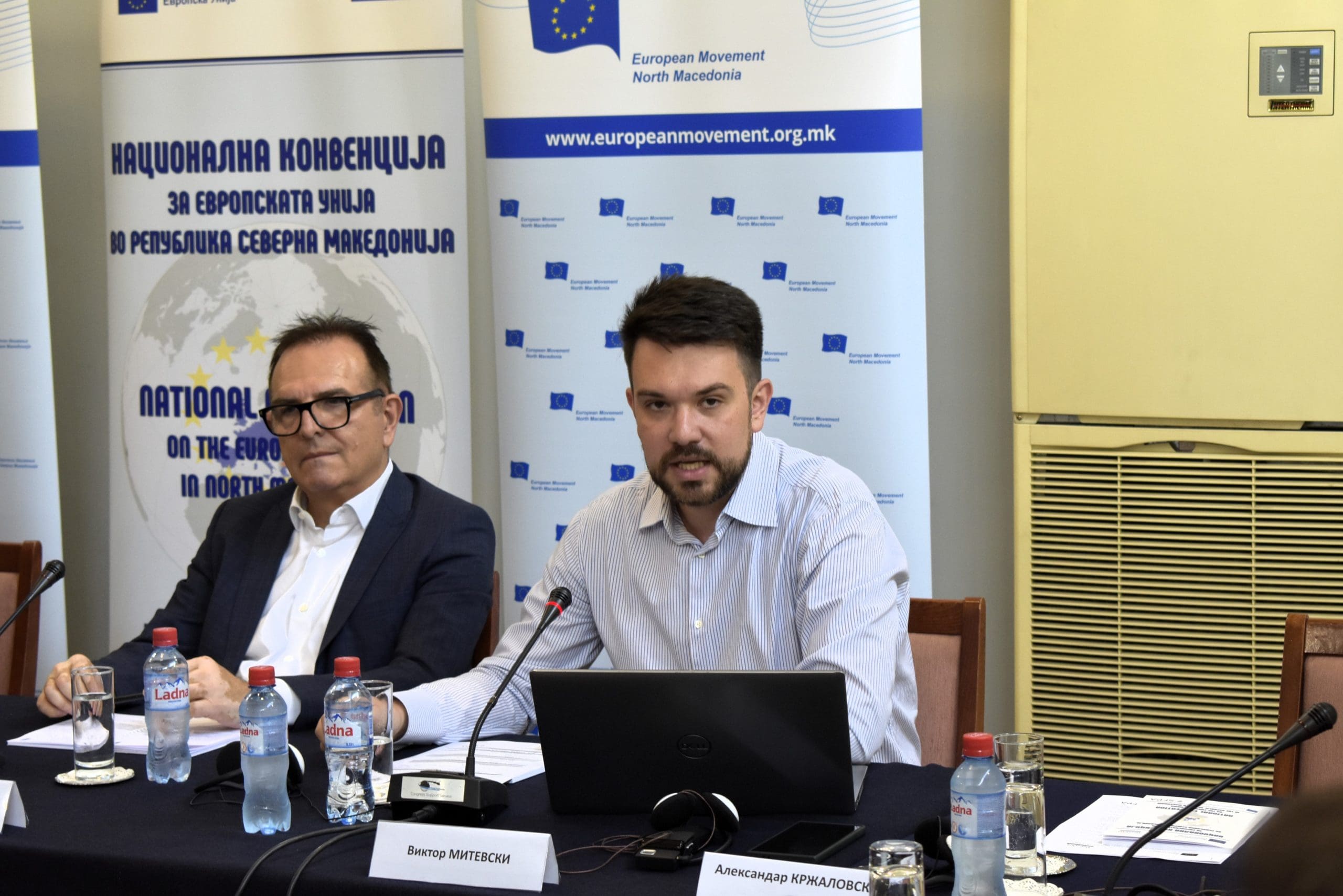
Viktor Mitevski, Coordinator of Working Group 6 of the National Convention on the European Union and Executive Director of the Association for Research and Analysis ZMAI in the final part of the session, he presented the draft recommendations from the group’s work. The recommendations relate to the institutionalization of the “value for money” principle, training and networking of the public administration and the private sector, the use of data in budget planning, encouraging independent analysis of public expenditures, as well as the introduction of efficiency indicators in public institutions. The presentation was part of the second panel of the debate moderated by Mitevski, which featured speakers: the President of the Financial Council, Gligor Bishev, the Former President of the State Commission for the Prevention of Corruption, Biljana Ivanovska, Antoni Peshev, Chief Executive Officer of the Chamber of Commerce and Sanja Madzarevic – Schujster, Senior Economist for the Western Balkans at the World Bank.
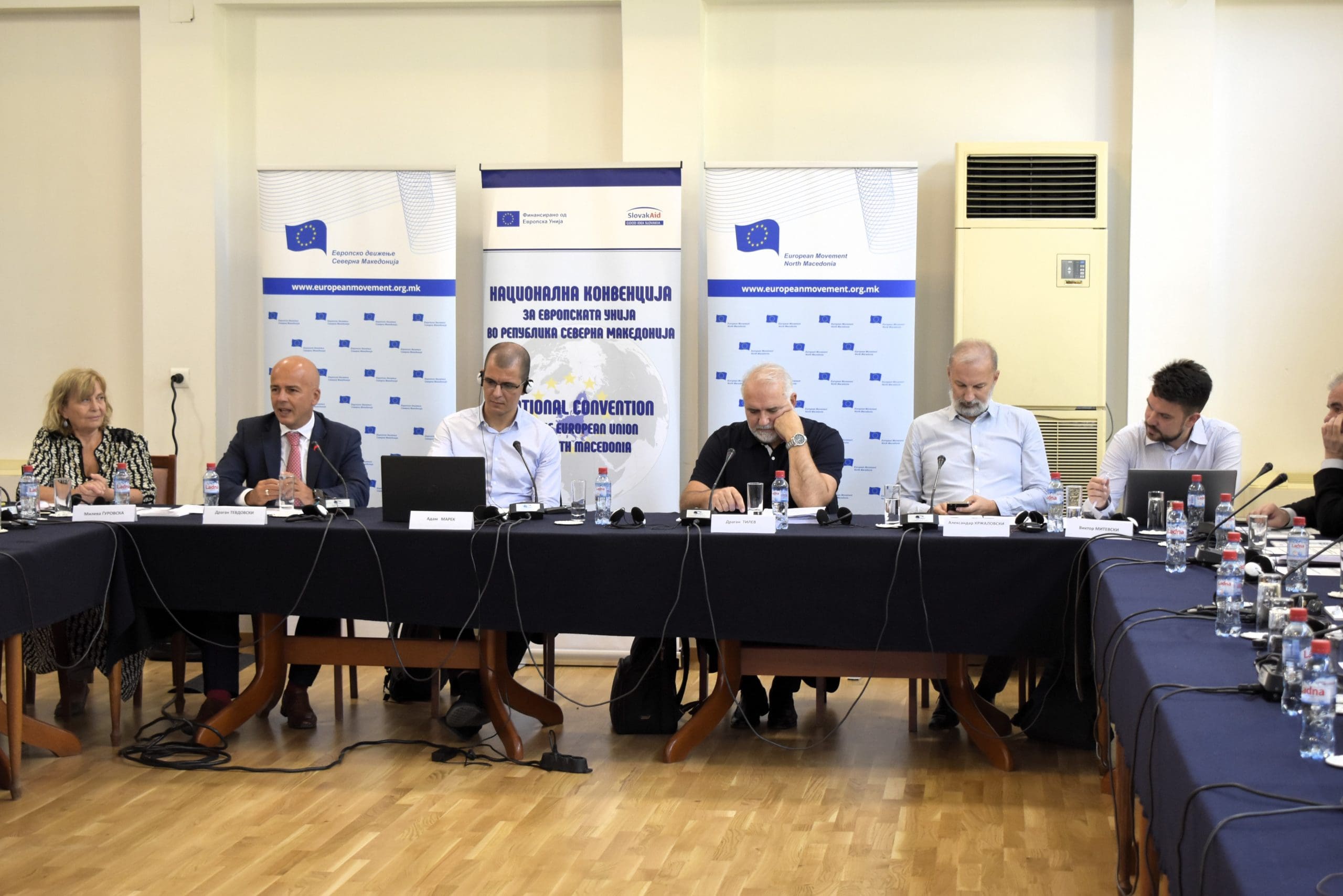
The first panel of the event was moderated by Aleksandar Kržalovski, President of MCIC, and speakers included Prof. Dragan Tevdovski, Dragan Tilev, Advisor to the Minister for European Affairs and Adam Marek, Director of the Slovak Value for Money Department
.Speakers on both panels spoke loudly about the need for professionalization of institutions, especially in measuring the value citizens receive in public procurement. The Slovak example of a team that continuously measures the results of large public investments, as a unit in the Ministry of Finance, was also discussed.
- In the 1990s, Macedonia and Slovakia were at the same level of GDP per capita. By the time it joined the Union, Slovakia had quadrupled its Gross Domestic Product. Today, it is 10 times higher than when the country gained independence. In contrast, Macedonian GDP per capita has increased only 3.5 times since independence. We should not see EU membership only as a political process, but we should focus much more on economic growth and benefits. This growth is partly supported by efficient spending on public investments. But also by the significantly greater participation of European funds in these economies. – Mitevski emphasized at the session.
The speakers agree that foreign policy is currently holding back these processes, but that does not mean that we should not do our work at home. We should look at European practices, push for greater access to EU funds, and do our best while we are in the EU’s waiting room to create growth.
The reform processes necessary for EU integration must include transparency in public finance management, digitalization and artificial intelligence as an effective tool for reducing corruption, systematic records and open data for social capital, enhanced accountability and integrity of institutions, data-based decisions, as well as continuity and motivation of human resources in public administration.
This is the conclusion of the 6th session of Working Group 6 – Anti-corruption (Chapter 5 – public procurement, Chapter 18 – statistics and Chapter 32 – financial control) on the topic “Administrative capacities for improving the value of public funds spent: What can we learn from the EU experiences?”, which was held on 17 July 2025 at the “Club of Members of Parliament” in Skopje.
More information can be found on the website of NKEU – MK
Recent Comments